
Loading...
Serving Ventura, CA and surrounding areas. (805) 507-9749
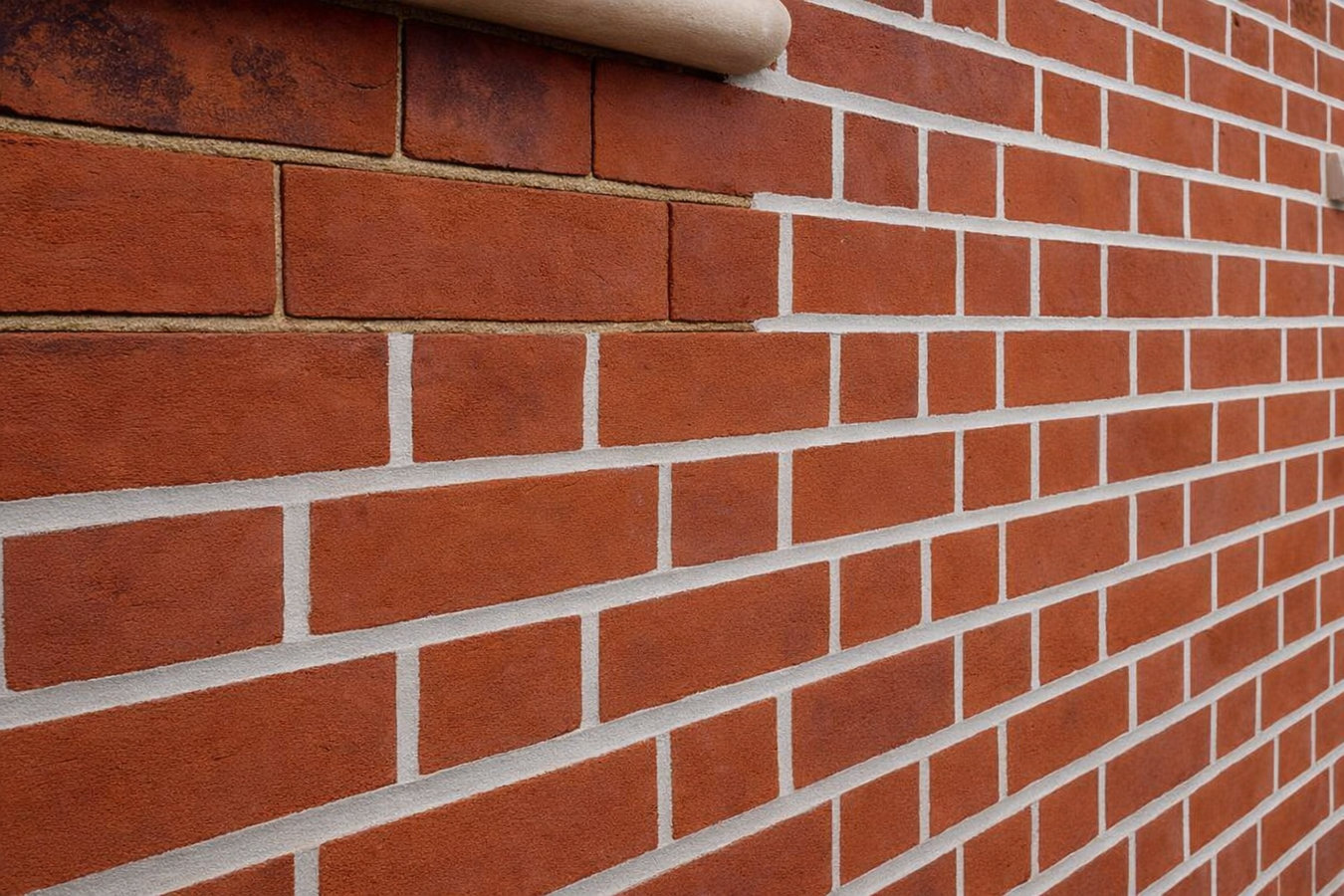
Soft, crumbling mortar is an open door for moisture - and Ventura winters make that worse fast. We repoint brick walls, chimneys, and planters with the right mortar mix for your home's age, location, and coastal exposure so the repair holds for decades.
Brick pointing in Ventura is the process of removing old, crumbling mortar from the joints between bricks and replacing it with fresh material - a standard chimney or small wall section typically completed in one to two days, with the mortar needing 24 to 48 hours to cure before it gets wet.
Mortar is softer than brick by design. It absorbs moisture and movement so the bricks themselves do not crack. But that softness means it wears out first - usually after 20 to 30 years, sometimes faster in coastal Ventura where salt air accelerates the breakdown. When mortar crumbles or pulls away from the brick edge, water gets in behind the wall. In Ventura, where winter rain can arrive in concentrated bursts after a long dry season, that is when the damage really accelerates. Many homeowners pair brick pointing with our foundation repair service when they discover water intrusion has already reached the base of a wall.
Repointing addresses the mortar, not the bricks themselves. If the bricks are spalling - flaking or breaking apart - or visibly cracked through, you may need some brick replacement as part of the same job. A good mason will tell you upfront if they spot bricks that need replacing during the assessment, and that work can usually be done at the same time without a separate mobilization.
Run your finger along the mortar lines between your bricks. If the material feels soft, sandy, or flakes off with light pressure, it has lost its strength. Healthy mortar feels hard and solid - like the brick itself. If it gives way easily, repointing is overdue.
Stand back and look at your brick wall or chimney from a few feet away. If you can see gaps, dark recessed lines, or places where mortar has pulled away from the brick edge, water is already getting in. In Ventura, where winter rains can be intense after a long dry stretch, those gaps are an open door for moisture damage.
A white, chalky residue on the brick surface - called efflorescence - means water is moving through the wall and carrying mineral salts to the surface. In a coastal city like Ventura, this can happen faster because of salt already present in the air. Deteriorated mortar joints are the most common entry point for the moisture causing it.
If your brick chimney, garden wall, or decorative brick feature was built before 2000 and has never been repointed, the mortar is likely at or past the end of its useful life. This is especially true for older homes in Ventura's Midtown and downtown-adjacent neighborhoods where original mid-century masonry is still common.
We repoint brick walls, chimneys, fireplace surrounds, garden walls, and planters throughout Ventura. Every job starts with removing the old mortar to a consistent depth - about three-quarters of an inch - so the new material bonds properly rather than just sitting on top of deteriorated joints. The mortar mix we use is chosen based on three things: the age of your home, how close you are to the coast, and what the original mortar was made of. Using the wrong mix - particularly a harder modern mortar on a pre-1970s home - can damage bricks over time rather than protect them. We discuss this during the estimate so there are no surprises. Homeowners dealing with broader masonry deterioration often combine brick pointing with our masonry restoration service for a full assessment and repair approach across the whole structure. The Brick Industry Association publishes technical guidance on repointing best practices at gobrick.com.
Color matching is part of the job on older homes. If your home was built in the 1940s or 1950s, the mortar color and joint profile are part of what makes it look the way it does. We take the time to match the new mortar to the original as closely as possible so the repair blends in rather than standing out as a patch. If you live in a community with an HOA that requires approval before exterior work begins, we can help you navigate that process.
Full mortar joint renewal for brick chimneys, including access for second-story work and inspection for seismic damage that may not be visible from the ground.
Mortar joint restoration for brick exterior walls, garden walls, and boundary features - suited to properties where wide-area deterioration has gone unaddressed for years.
Interior mortar joint repair on fireplace brick surrounds, combined with brick replacement where individual units are cracked or spalling.
For homes near the Ventura harbor and Pierpont area, we use mortar mixes suited to salt-air environments so the repair holds up instead of deteriorating faster than standard formulas would inland.
For pre-1970s Ventura homes, we assess the original lime-based mortar and choose a compatible replacement that protects the bricks rather than stressing them.
Identification and treatment of white mineral staining caused by water movement through joints, combined with mortar repair to address the underlying moisture entry point.
Ventura's older neighborhoods - Midtown, the Westside, and areas near downtown - have a large share of homes built between the 1920s and 1960s. Brick and masonry from that era was often built with softer lime-based mortars that are now well past their service life. In many cases, the mortar joints on these homes have not been touched since the house was built, which means the deterioration may be more extensive than it looks from the street. Add the salt air from the Pacific - which works its way into tiny pores and breaks mortar down from the inside faster than in inland cities - and many Ventura homeowners find their mortar needs attention sooner than they expected. We work regularly with homeowners in Ventura who are dealing with exactly this combination of factors.
Seismic activity adds another layer. Ventura County sits in an active seismic zone, and even earthquakes you barely felt can shift masonry and widen mortar joints in ways that are not obvious from the ground - particularly in chimneys. Getting mortar done before the rainy season starts in November is the smartest timing for most Ventura homeowners, because that is when deteriorated joints are most vulnerable to water entry. Homeowners in Santa Paula face similar older housing stock and we apply the same material assessments on every job there. California's seismic hazard mapping for Ventura County is maintained by the state at conservation.ca.gov.
Tell us where the brickwork is and roughly how large the area is. A few photos help. We reply within 1 business day and are happy to answer questions before you commit to a site visit.
We walk the area with you, check how deep the deterioration goes, flag any bricks that need replacing, and explain what we find in plain terms. A written quote follows so you know the cost before anything begins.
Clear the area around the wall or chimney - move furniture or planters within a few feet of the work zone. The crew grinds out old mortar, packs in fresh material, and shapes the joints to match the original profile. Most jobs finish in one day.
We clean up mortar dust and debris before we leave and walk you through the finished joints. Fresh mortar needs to stay dry for 24 to 48 hours - we confirm the curing instructions in writing before we go.
Free on-site estimate with no obligation. Written quote before any work begins.
(805) 507-9749Pre-1970s Ventura homes were built with softer lime-based mortars. We assess the original material and choose a compatible replacement - using a harder modern mix without thinking about this can cause brick damage over time, and we do not cut that corner.
For homes near the Ventura harbor and the Pierpont area, we use mortar formulations suited to salt-air environments. The Brick Industry Association's technical resources inform our material selection on every coastal job.
Ventura County is mapped as an active seismic hazard area. On chimney repointing jobs, we assess for earthquake-related joint movement that may not be visible from the ground - a step most contractors skip entirely.
One of the biggest fears homeowners have is a contractor who starts a job and discovers a growing list of expensive problems. We do a thorough assessment before we start, tell you what we see, and explain what needs to be done now versus what can wait. No surprises on the final invoice.
Brick pointing is one of the most cost-effective maintenance jobs you can do on a masonry structure - far cheaper than the water damage and wall repairs that follow when it is ignored. These details are what separate a repair that lasts 25 years from one that needs redoing in five.
Address water intrusion and structural movement at the base of your home before it compounds into a larger problem.
Learn MoreFull assessment and repair of deteriorated masonry structures - brick, stone, and block - across the entire property.
Learn MoreFall slots fill fast as homeowners prepare for the rainy season - reach out now to get on the schedule before November.